
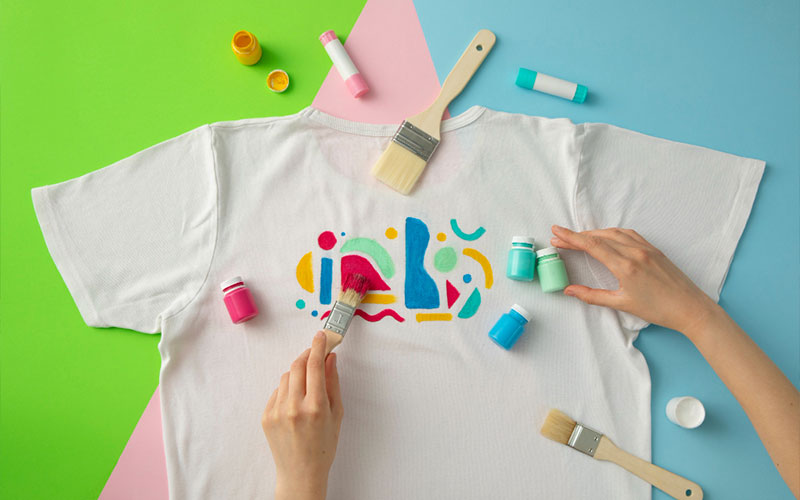
The «General Store» is Dead — In the early days of Print-on-Demand (POD), you could throw a generic «I Love Coffee» design on a t-shirt, upload it to a marketplace, and wait for the royalties to roll in. Those days are officially over. By 2026, the global POD market has become a sea of noise. If you try to sell to «everyone,» you end up selling to no one.
The biggest mistake new digital entrepreneurs make is fear—the fear of «missing out» on customers by being too specific. But in the world of e-commerce, specificity is your superpower. To succeed, you don’t need a massive audience; you need an obsessed one. You need a micro-niche.
Defining the Micro-Niche: Beyond the Surface
A «niche» is a broad category of people with a shared interest. A «micro-niche» is a hyper-specific sub-culture within that category that has its own language, inside jokes, and aesthetic preferences.

The Levels of Specificity:
- Broad Category: Pet Lovers (Too competitive, no emotional «hook»).
- Niche: Dog Owners (Still too broad, millions of generic designs exist).
- Micro-Niche: Owners of Senior Golden Retrievers who live in urban apartments.
Why does this work? Because a «Pet Lover» won’t feel a deep emotional urge to buy a generic paw-print shirt. But an urban owner of an aging Golden Retriever will feel like you are reading their mind when they see a design about «elevator rides with a gray-faced best friend.» That emotional «click» is what triggers the «Add to Cart» button.
The «Intersection of Intent» Formula
To find a winning micro-niche for your POD business, you need to look for where two distinct parts of a person’s identity collide. This creates a «blue ocean» of low competition.
The Formula: [Identity A] + [Interest/Struggle B] = Profit
- Example 1: Mechanical Engineers (Profession) + 80s Synthwave Aesthetic (Visual Interest).
- Result: Neon-lit, retro-futuristic schematics of engines.
- Example 2: Introverted Gardeners (Hobby) + True Crime Podcasts (Obsession).
- Result: A shirt that says «I just want to stay in my garden and listen to murder mysteries.»
- Example 3: Night-Shift Nurses (Struggle) + Extreme Coffee Culture (Necessity).
- Result: High-end typography designs about «Surviving the 3 AM Rounds on Caffeine and Chaos.»
By finding these intersections, you create products that feel custom-made. You aren’t just selling a shirt; you are selling a badge of identity.
The Psychology of the «Micro-Tribe»
Humans have a biological need to belong to a tribe. When a customer sees a design that uses a specific term, a «niche» joke, or a visual style that only their community understands, they feel validated.
In 2026, people don’t buy POD products for the utility (the shirt or the mug). They buy them for the statement. They want to walk down the street or post a selfie that says, «I am part of this group.» As a Digital Artisan, your job is to create the «uniform» for that micro-tribe.
How to Validate a Micro-Niche (The No-Cost Framework)
Never spend hours designing for a niche you haven’t validated. Use these «guerrilla» research tactics:
- Reddit and Quora Deep-Dives: Find subreddits with 10k–50k members. Read the «Top» posts of all time. What are they complaining about? What are they laughing at? Those are your design slogans.
- Pinterest Trends & TikTok Creative Center: Look for rising aesthetics. Is «Cottagecore» still big, or is «Dark Academia» taking over a specific hobby? Use these visual cues to inform your Adobe designs.
- Amazon & Etsy Reviews: Look at the «1-star» and «4-star» reviews of your competitors. What is missing? What do people wish the design said? Fill that gap.
- Keyword Intent Research: Use SEO tools to find long-tail keywords. If people are searching for «Funny gift for retired commercial pilots,» but only finding generic airplane shirts, you have found a goldmine.
Design Sovereignty: Why Adobe is Your Best Friend
In a micro-niche, quality matters more than quantity. People in these communities have seen the basic, low-res clip art a thousand times. They are looking for something premium.
This is where your skills as a Digital Artisan come in. Using Adobe Illustrator for clean vector typography and Photoshop for realistic textures allows you to create designs that don’t look like «POD spam.» When your work has the quality of a high-end streetwear brand but the message of a micro-niche, you can charge premium prices.
Avoiding the «Copyright Trap»
One of the fastest ways to kill your new POD business is infringing on Intellectual Property (IP).
- The Rule: Stay away from movies, TV shows, celebrities, and song lyrics.
- The Solution: Create your own IP. By focusing on communities (like «Electricians») rather than brands (like «Marvel»), you build a sustainable business that no lawyer can take down.
Always use Adobe Firefly and Adobe Stock to ensure your base elements are commercially safe, protecting your store from sudden bans.
Scaling: From One Micro-Niche to an Empire
Once you have 10 designs that are selling consistently in one micro-niche, don’t just stop.
- Vertical Scaling: Add more products for the same niche (hoodies, mugs, posters).
- Horizontal Scaling: Take a successful concept and port it to a parallel If the «Introverted Gardener» design worked, try «Introverted Knitter» or «Introverted Baker.»
Empathy is the Ultimate Marketing Tool
Success in Print-on-Demand isn’t about being a master artist; it’s about being a master empathizer. It’s about looking at a small group of people, understanding what makes them proud, what makes them laugh, and what makes them feel seen, and then giving them a physical way to express it.
Stop looking for the «next big thing» and start looking for the «next small group.» The fortune is in the micro-niche.
Are you ready to build your Micro-Niche Empire?
Don’t wait for the «perfect» idea. Pick a community you understand (or one you are willing to study) and start designing today.